
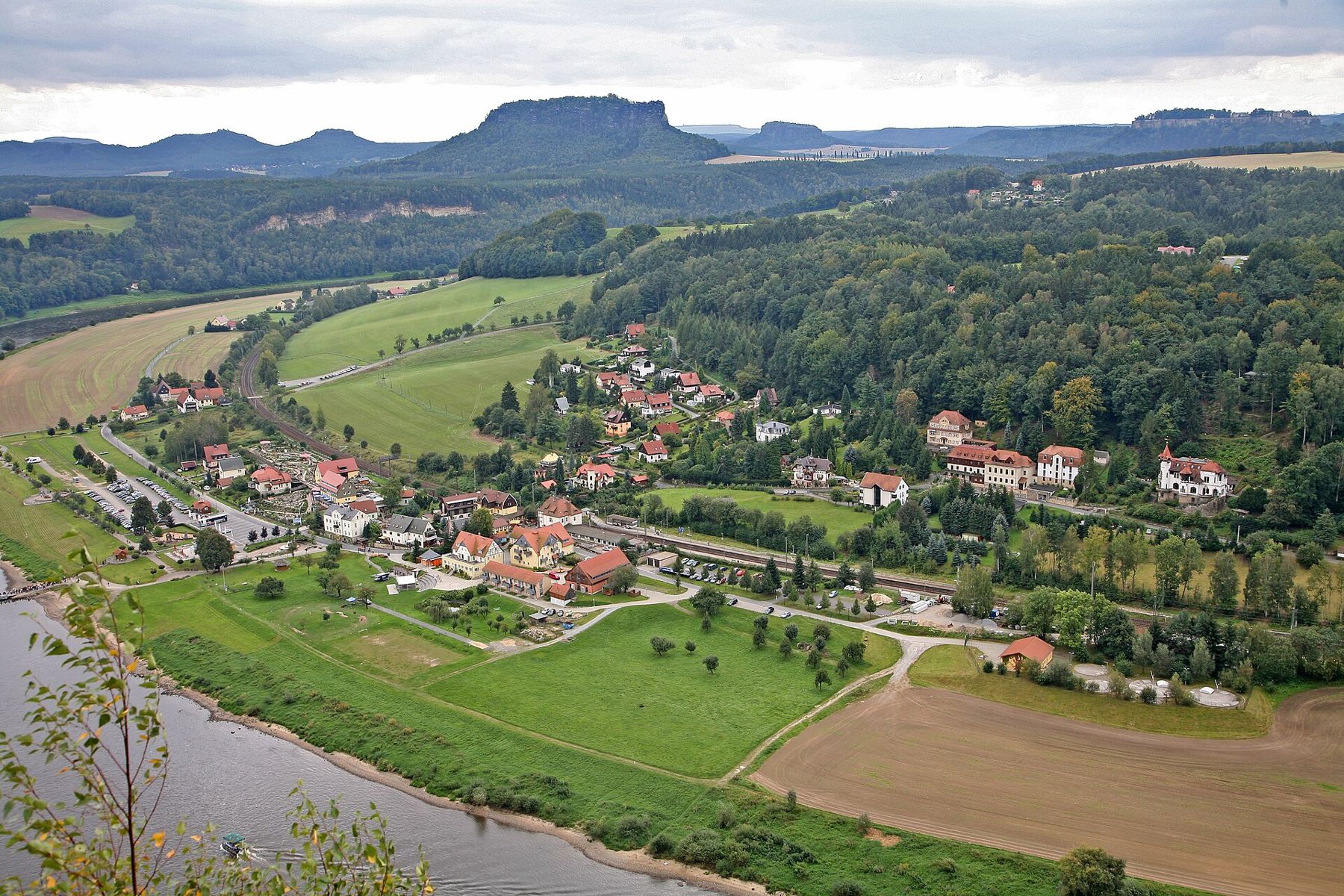
On the river The Bastei rocks stand about 190 metres above the Elbe, and from the viewing platforms you look straight down on the river bend, the ferry and the rooftops of Kurort Rathen.
About forty kilometres upstream from Dresden the Elbe leaves its broad valley and enters a different country. The banks rise into cliffs, forests close in, and on the heights stand towers and tables of pale sandstone worn into columns, needles and walls. This is the Elbsandsteingebirge, the Elbe Sandstone Mountains, known since the eighteenth century by the name Swiss painters working at the Dresden academy gave it: Sächsische Schweiz, Saxon Switzerland.
The most famous point in it is the Bastei, a cluster of rock towers on the right bank above the village of Kurort Rathen. It is the place every postcard of the region shows, and it is busy for good reason. Go early, and it is one of the finest viewpoints in central Europe.
How the rocks were made
The sandstone was laid down as sand on the bed of a shallow sea in the Cretaceous period. Over immense spans of time it hardened into thick horizontal beds, and when the land rose the Elbe and its side streams cut down through it. Water, frost and wind then worked along the joints and cracks in the stone, widening them into gorges and leaving the harder blocks standing as towers.
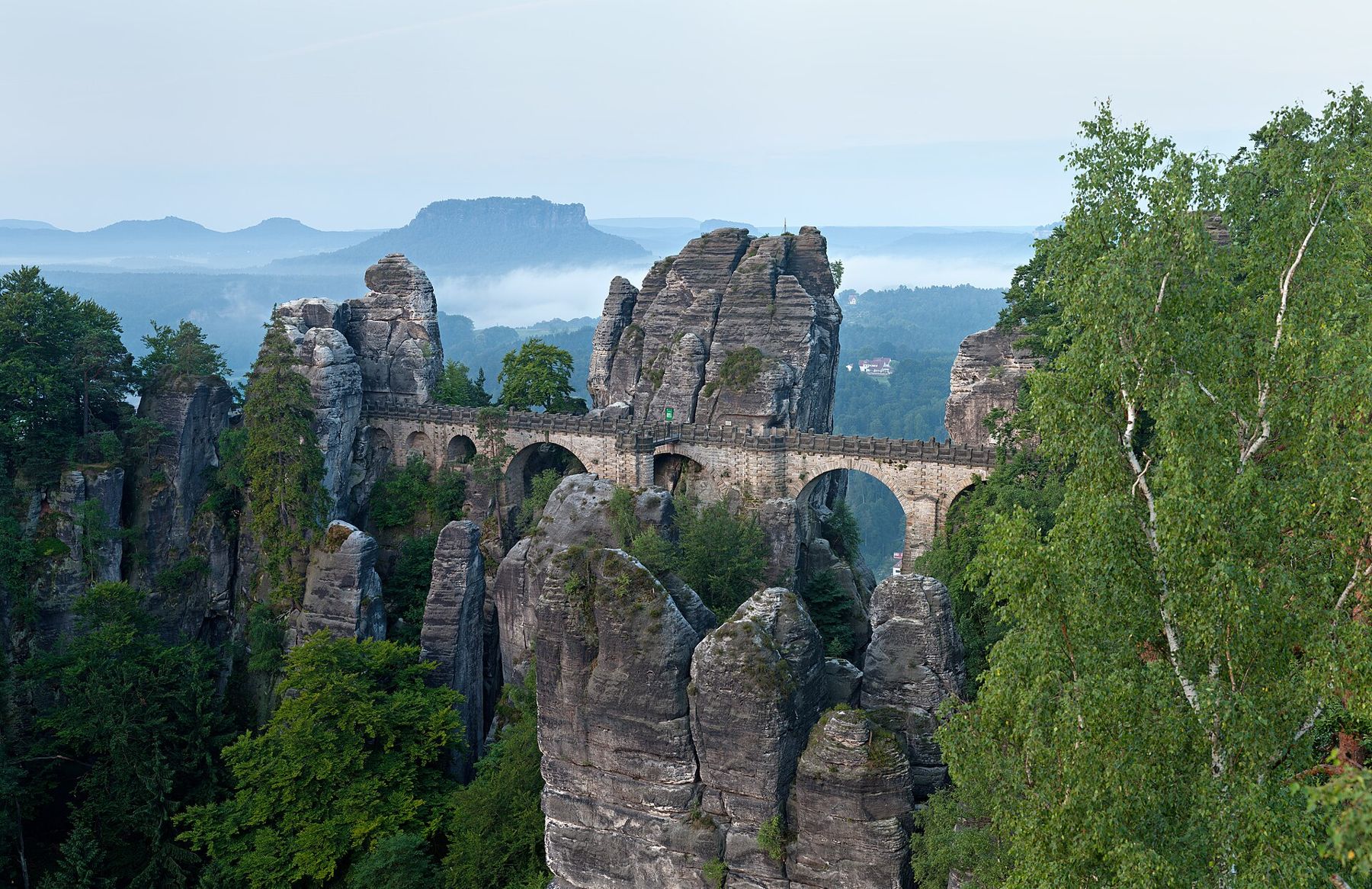
You can read that history in the rock itself. Look closely at any of the Bastei pinnacles and you see horizontal bands where one layer of sediment lies on the next, and rounded hollows and honeycomb patterns where weathering has eaten into softer patches. The forms are still changing, slowly, and parts of the area are closed from time to time when loose rock needs securing.
The Bastei bridge
Visitors were coming up here to look at the view by the late eighteenth century, and in 1824 a wooden bridge was built across the gaps between the rocks so that people could walk out among the towers. It was replaced in 1851 by the stone bridge that stands today: seven arches of local sandstone spanning a ravine called the Mardertelle, with parapets along the walkway and the rock needles rising on either side.
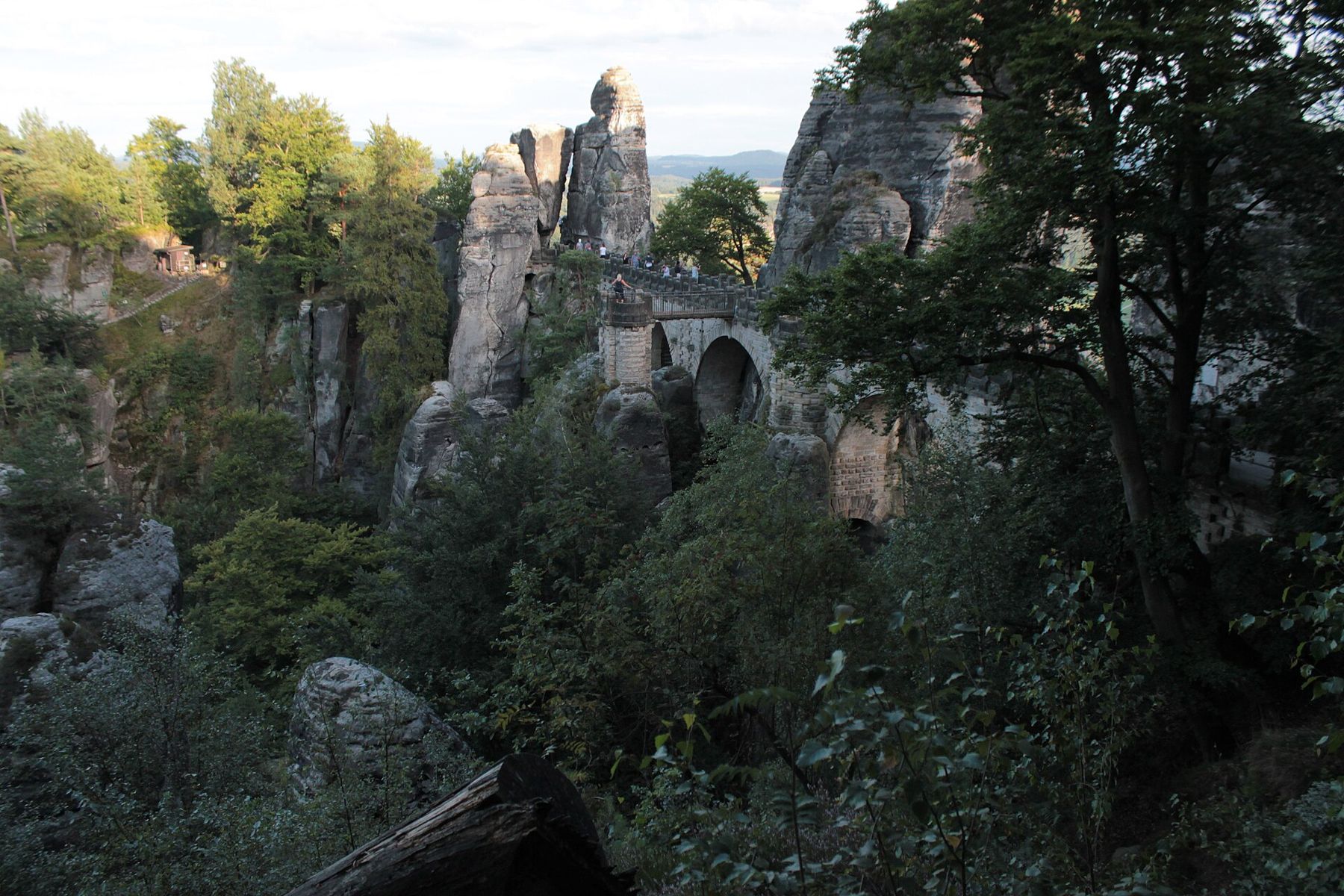
The bridge is not long, and you can cross it in a few minutes, but the setting is the point. You walk among the pinnacles rather than looking at them from a distance, and through the arches you catch glimpses of forest far below. From the viewing platforms near the bridge the landscape opens to the south and east, with the flat-topped Lilienstein across the river and, on a clear day, the walls of the fortress of Königstein on its own table mountain beyond.
You walk among the pinnacles rather than looking at them from a distance, and through the arches you catch glimpses of forest far below.
Neurathen castle and the national park
At the far end of the bridge lie the remains of Felsenburg Neurathen, a medieval rock castle. Little masonry survives: what you see are the cuts, steps, beam sockets and cisterns hewn into the sandstone itself, now linked by footbridges and walkways that let you climb through the old defences. There is a small charge for the castle area; check before you go whether it is open.
The Elbe · and nearbyPillnitz Palace and its gardensThe Bastei sits within the Nationalpark Sächsische Schweiz, the Saxon Switzerland National Park, created in 1990. Its two sections protect much of the sandstone country on the German side of the border, and it continues into the Bohemian Switzerland park across the frontier in the Czech Republic. Within the park the rules are simple: keep to marked paths, take your rubbish home, and leave the plants and rocks alone. The area also has a long tradition of free climbing on the sandstone towers, with its own strict local rules, and you will often see climbers on the faces around the Bastei.
Getting there and going up
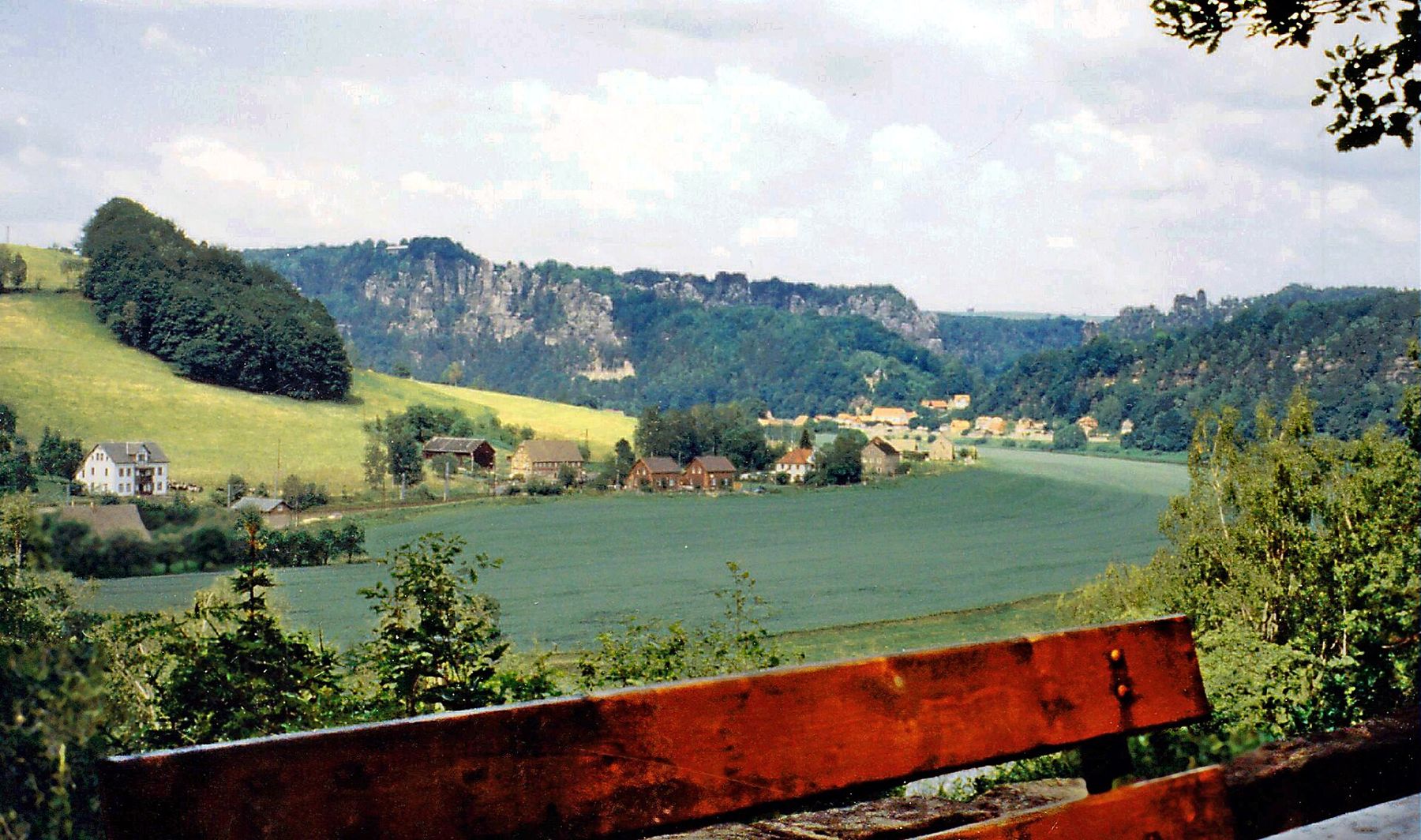
The classic approach is by train. The S1 line of the Dresden S-Bahn runs along the left bank of the Elbe from the main station, past Pirna, to the stop for Kurort Rathen; the main station is the easiest place to board. The station is on the opposite bank from the village, so the next step is a short crossing on the small Elbe ferry, which runs back and forth throughout the day.
From the riverside in Rathen, signed paths climb to the Bastei. The direct route is steep, mostly on steps and stone paths through the woods, and takes most walkers somewhere between half an hour and an hour. A longer and quieter way leads up through the Schwedenlöcher, a narrow gorge with ladders and stairways, and makes a good descent if you want a loop.
There is also road access to the plateau from the other side, with parking and buses, which is why the viewpoints fill up so fast. In the warmer months a paddle steamer from Dresden can bring you to Rathen too; the boats are slow against the current but make a fine way to arrive, and our guide to the paddle steamers has the general picture.
Crowds and early starts
The Bastei is among the most visited places in eastern Germany, and between late morning and mid afternoon, especially at weekends and in summer, the bridge and the platforms can be crowded enough to slow you to a shuffle. The answer is simple: arrive early. An early train from Dresden puts you on the bridge before the coaches, often in soft light, and in spring and autumn there is a fair chance of mist lying in the valleys below.
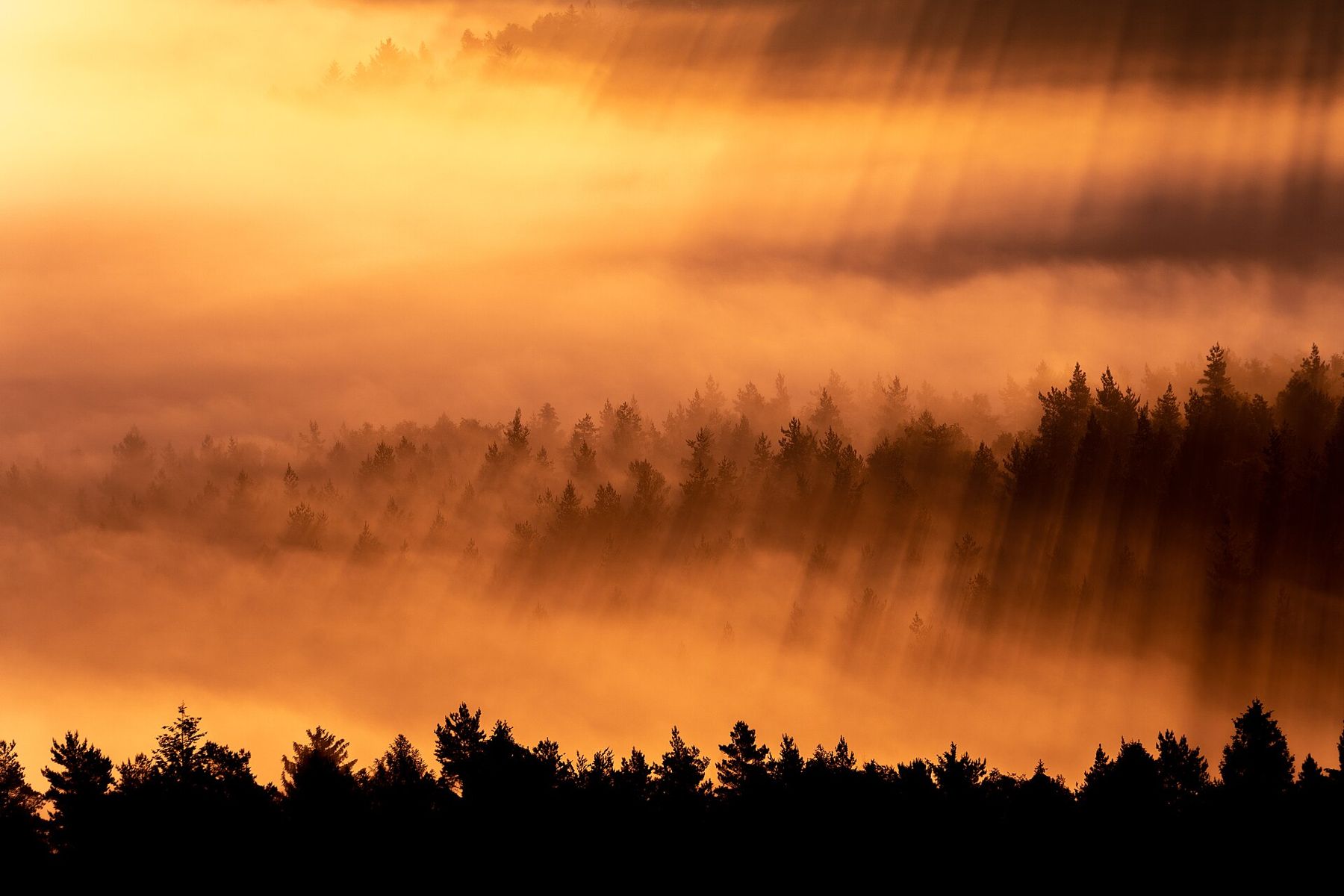
Evenings are quieter too, though you need to keep an eye on the last ferry and train. Late autumn and winter bring the fewest people, at the cost of short days and icy steps.
Weekdays are calmer than weekends, and the weeks outside the school holidays calmer still. If you can only come at midday, it helps to treat the bridge as one stop rather than the whole visit: cross it, see the castle ruins, then take one of the quieter paths along the rim or down through the gorges, where within a few minutes the crowd thins and you hear the forest again. The rocks look different in every light, and a second look on the way back down, when the sun has moved, is rarely wasted.
- Wear shoes with grip: the stone steps can be slippery when wet.
- Carry water; there are places to buy food on the plateau, but queues can be long at midday.
- Check the S-Bahn and ferry times before you set out, and note the last crossings.
- If you want more walking, the long-distance Malerweg, the Painters' Way, passes through Rathen and the Bastei.