
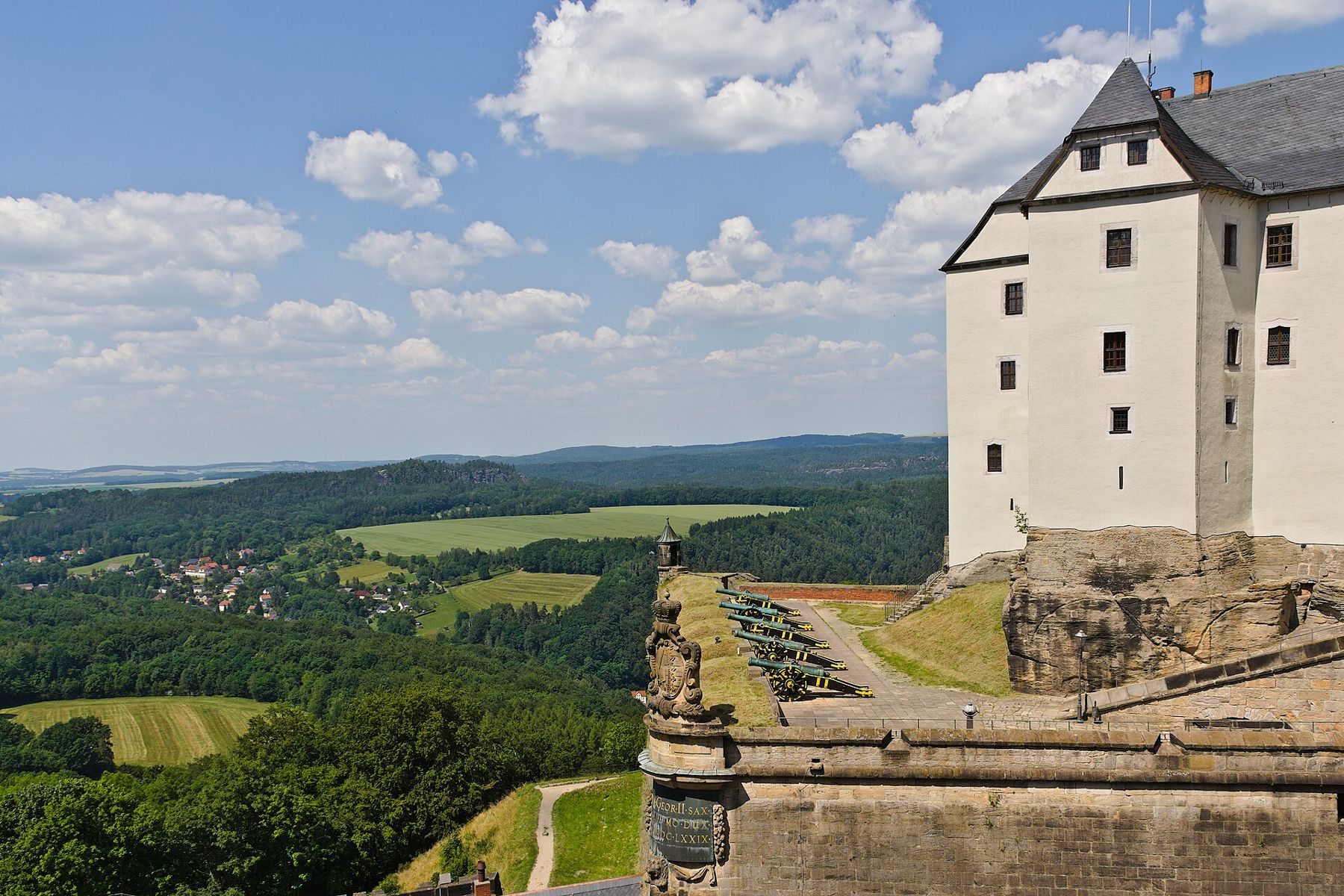
On the river The fortress walls run along the cliff edge high above a bend in the Elbe, looking down on the town of Königstein, the railway and the river traffic below.
Saxon Switzerland is full of table mountains, flat-topped blocks of sandstone that rise steeply out of the forest and farmland. One of them, on the left bank of the Elbe above the small town of Königstein, carries a fortress. The Festung Königstein covers the whole plateau, its walls following the edge of the cliffs, and it ranks among the largest hilltop fortresses in Europe.
It makes a natural partner to a visit to the Bastei on the opposite bank, and on a clear day each is visible from the other.
A rock made into a fortress
The site was fortified in the Middle Ages, when the area belonged to the Bohemian crown, and it passed to the Saxon rulers in the fifteenth century. From the late sixteenth century they turned it into a state fortress, and over the following centuries it was extended again and again, as military engineering changed and as each ruler added his own buildings.
What made the place so strong is the rock. The cliffs on every side are sheer sandstone, so the builders needed only to crown them with walls and bastions and to guard the one practical way up. The result is a plateau of several hectares, ringed by a wall that runs for close to two kilometres, with barracks, arsenals, a church, houses and gardens inside it.
The fortress served as a refuge for the court and its treasures in times of danger, as a garrison, and for long periods as a state prison. It was never meant to be beautiful, but the mixture of styles across four or five centuries gives it a lived-in character, and the setting does the rest.
Gates, bastions and the Georgenburg
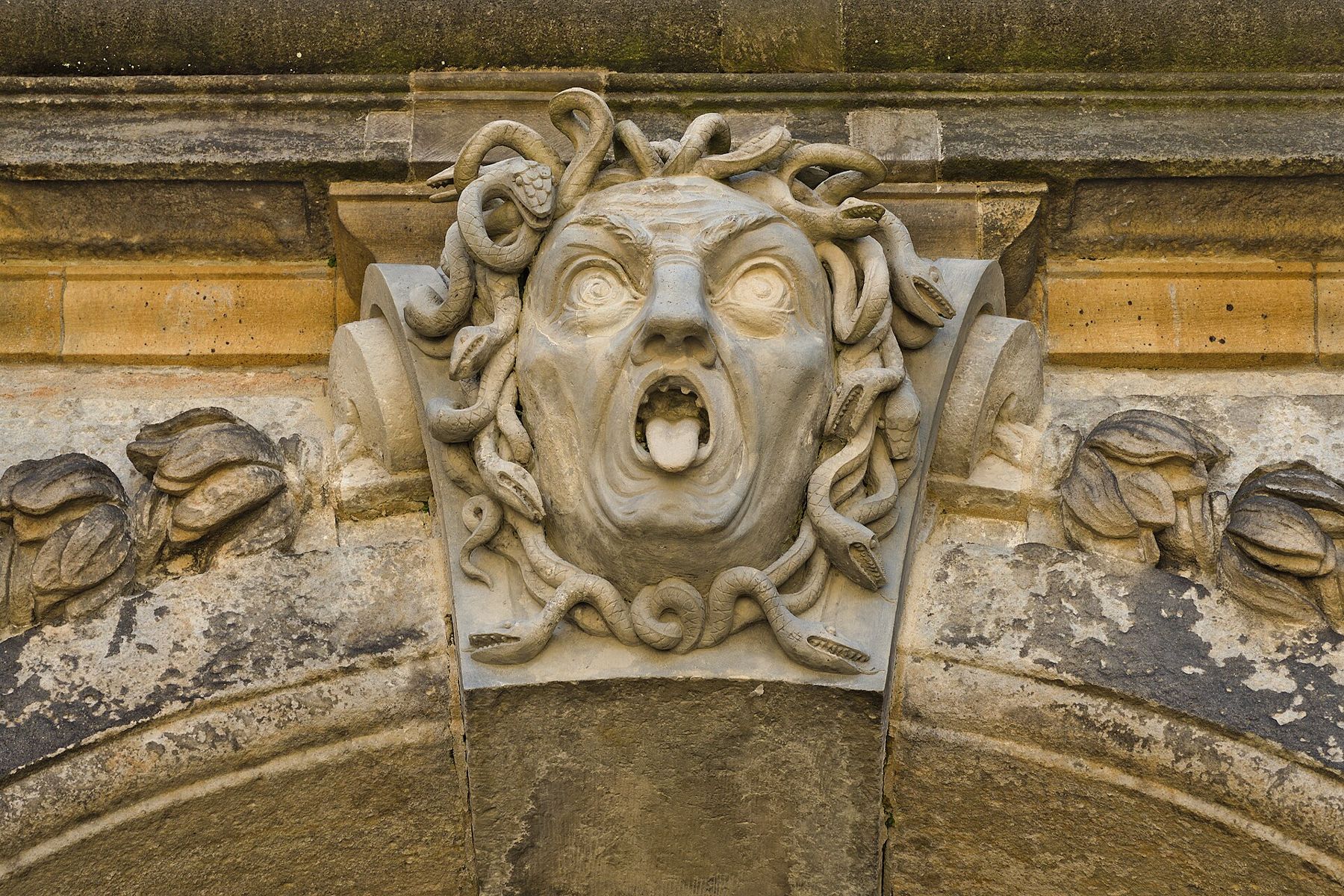
You enter through a sequence of gates and a long, steep passage cut into the rock, a defensive approach designed so that anyone coming up could be watched and fired on from above. One of the older gateways carries a stone Medusa head over its arch, a classical symbol meant to ward off enemies.
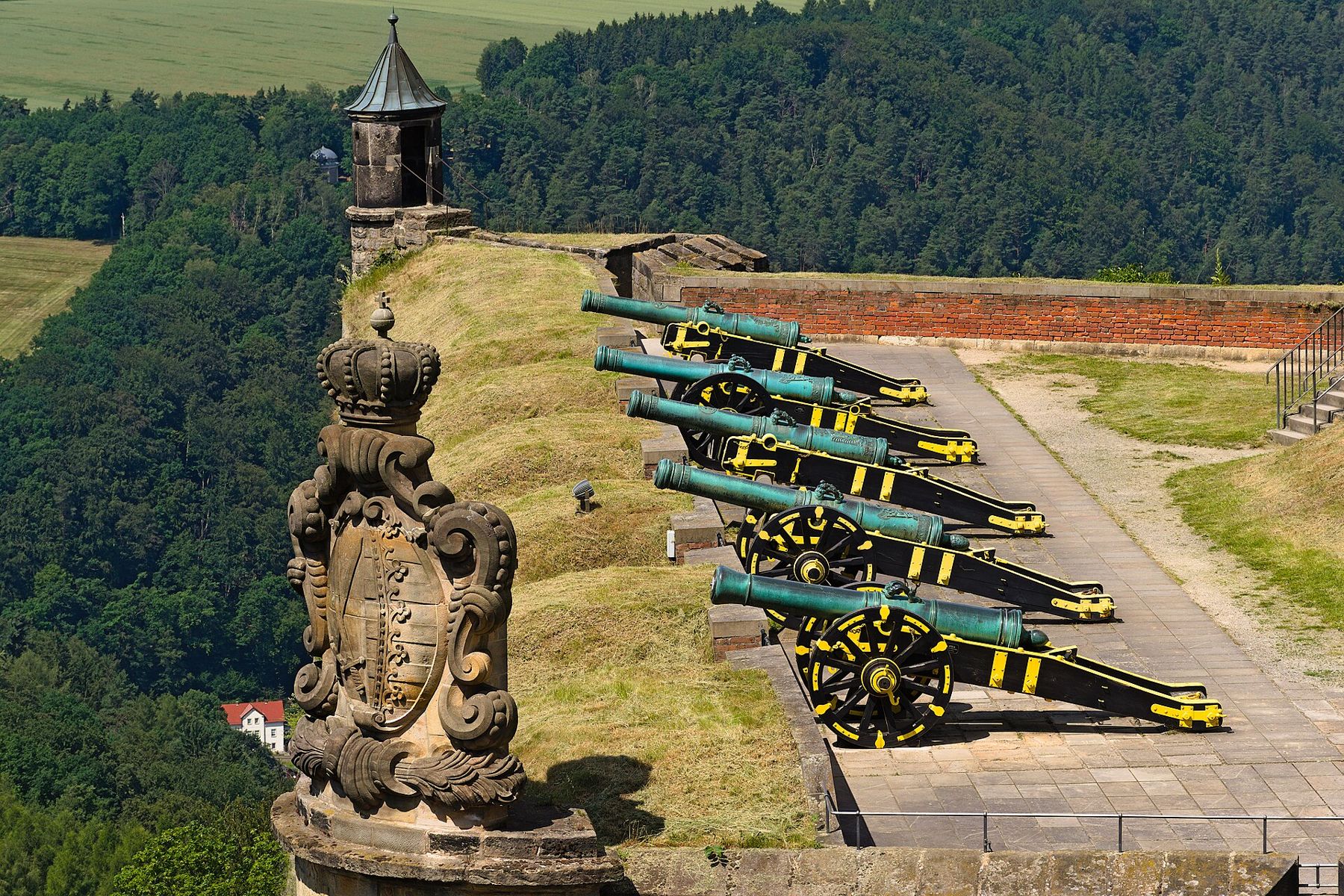
Once on top, the plateau feels surprisingly open. Paths lead around the walls past bastions and gun platforms. On the Georgenbastion a row of bronze cannons on painted carriages points out over the valley, beside a carved Saxon coat of arms under a crown; the guns are display pieces, but they give a good idea of how the walls were meant to work.
Above the bastion rises the Georgenburg, one of the oldest buildings on the plateau, a tall white block that later served as a prison. Other buildings hold exhibitions on the fortress's military life, its prisoners and its role in Saxon history; the displays change, so check what is open when you visit.
The deep well
A fortress on a rock can hold out only as long as its water. Cisterns could store rain, but for a long siege the garrison needed a source of its own, and in the sixteenth century miners were set to dig a well straight down through the sandstone. It took years of work to reach water at a depth of about 152 metres, far below the level of the Elbe at the foot of the mountain.
Saxony · and nearbyMoritzburg Castle on its lakeThe well is one of the deepest in Saxony and among the deepest of its kind in Europe. A well house stands over it, and inside you can look down the shaft, which is lit so that the depth becomes visible. It is a slightly vertiginous experience, and a reminder of how much labour, by hand and with simple tools, went into making the plateau self-sufficient.
Views from the walls
For many visitors the walk along the walls is the real reason to come. The fortress stands high above the river, and from the parapets the whole of the Elbe valley opens up: the river curving below, the railway and the town at the water's edge, and across the valley the great flat-topped bulk of the Lilienstein. Further off, the sandstone towers and table mountains of Saxon Switzerland stretch away towards the Czech border.
The circuit of the walls is level and easy, though exposed. Bring a layer even in summer, as the wind can be strong up here. Benches and viewpoints are spread around the plateau, and you can easily spend an hour on the walls alone.
Getting there and going up
The S1 line of the Dresden S-Bahn runs from the main station along the Elbe to Königstein in under an hour, stopping at Pirna and Kurort Rathen on the way. In the sailing season the historic paddle steamers also call at Königstein, a slower but more scenic way to come upriver.
From the station and the town, the fortress is a stiff climb. A footpath winds up through the woods and takes most people somewhere around three quarters of an hour; it is steep in places but well marked. In season a small road train runs up from the town to the foot of the fortress, and from the entrance area a lift carries visitors up the cliff to the plateau, so the climb is optional. Times and tickets vary through the year, so check before you go.
Odds and ends for the day
- Allow half a day for the fortress, or a full day if you combine it with the Bastei or a walk on the Lilienstein.
- Wear shoes with grip; the paths and passages are cobbled and steep in places.
- There is food on the plateau, but bringing water is wise in summer.
- The fortress was one of the places where the Saxon court kept valuables safe in troubled times, a counterpart to the treasure rooms of the Residenzschloss in Dresden.