
On the river The raids burned the old town along the Elbe front; many people fled to the river meadows, and today the rebuilt skyline across the water is the clearest sign of the rebuilding.
Almost every visitor to Dresden arrives knowing that the city was bombed at the end of the Second World War. What is harder to see, walking through the old town today, is how much was lost and how much of what stands now was rebuilt. This guide sets out what happened, as carefully as it can be told, and how the city has been put back together over three-quarters of a century.
The raids of 13 to 15 February 1945
By early 1945 Dresden had been bombed only lightly. It was crowded with refugees fleeing the advance of the Soviet army from the east. On the night of 13 February the Royal Air Force attacked the city in two waves, a few hours apart. The United States Army Air Forces followed with a daylight raid on 14 February and again on 15 February.
The night attacks were the most destructive. Incendiary bombs set the closely built old town alight, and the fires merged into a firestorm that drew air in from all sides and burned for hours. Many people died in cellars and shelters from heat and lack of air; others were caught in the streets. Those who could fled towards the open spaces, including the Grosser Garten and the meadows along the Elbe.
How many people died was argued over for decades, and inflated figures circulated widely, some of them for propaganda. In 2010 a commission of historians appointed by the city published its findings after years of work with records, burial lists and archaeological evidence. It concluded that up to about 25,000 people had been killed. That is the figure the city uses today.
Burying the dead
The scale of the deaths overwhelmed the authorities. Many victims were buried in mass graves at the Heidefriedhof, a woodland cemetery on the northern edge of the city, at the edge of the Dresdner Heide forest. Others could not be identified, and in the weeks after the raids a large number of bodies were burned on pyres on the Altmarkt to prevent disease. Their ashes were later buried at the Heidefriedhof too.
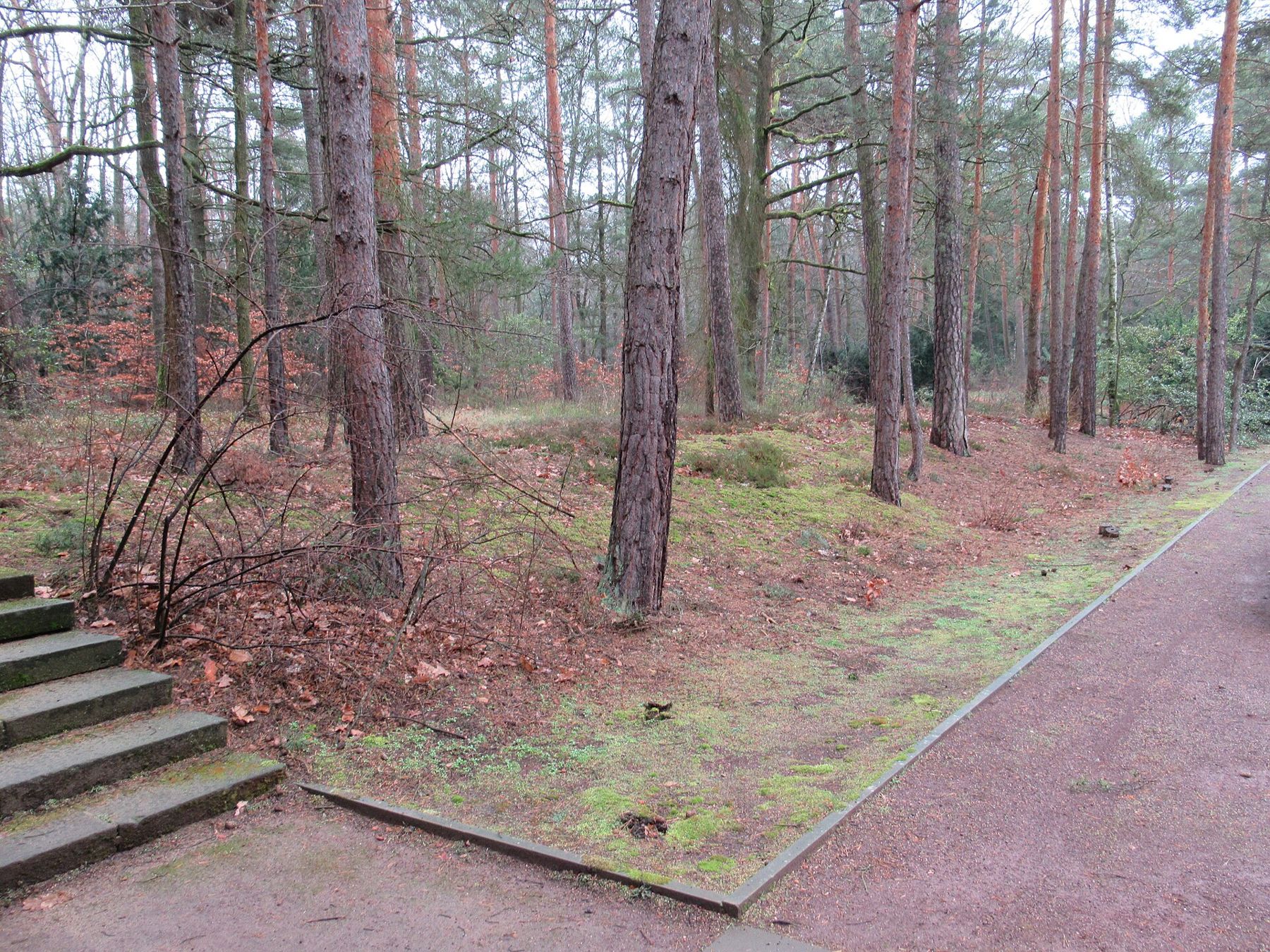
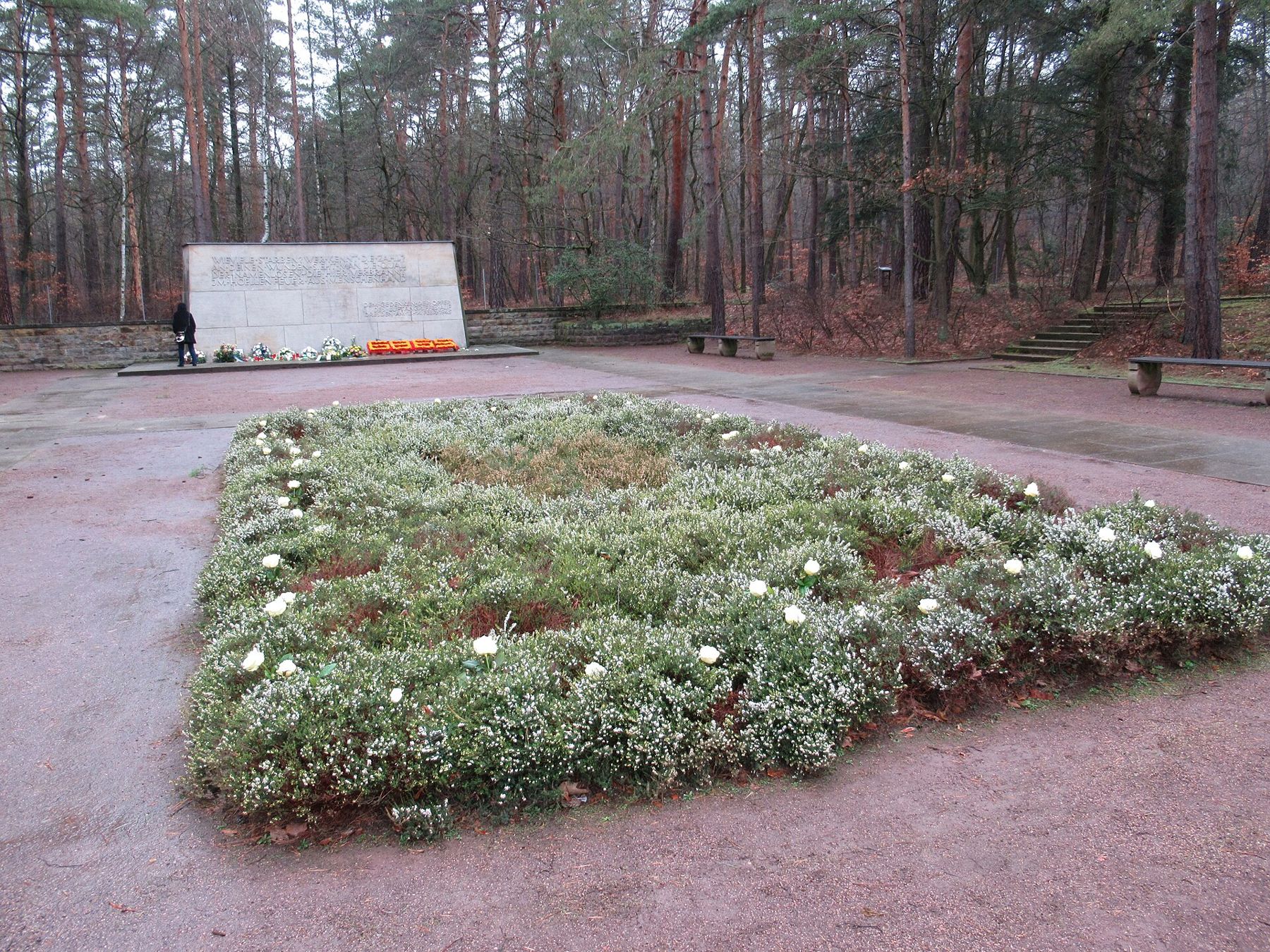
Today the graves lie under low mounds among pine trees, marked by simple stone edges. Near them is a memorial area with a wall carrying an inscription about the dead, and a circle of stone pillars bearing the names of other cities and places of wartime suffering. The ash grave lies in front of the wall, a bed of heather where people leave flowers.
The cemetery is quiet and some way from the centre, reached by tram and a short walk. It is a sober place to understand the human cost, without the crowds of the old town.
Today the graves lie under low mounds among pine trees, marked by simple stone edges.
The GDR rebuilding
When the war ended, the centre of Dresden was largely a field of ruins. The city fell within the Soviet zone and then the German Democratic Republic, and rebuilding took place under its plans and priorities. Rubble was cleared by hand, much of it by women, and a few great buildings were restored early: the Zwinger was rebuilt in the years after the war, and the opera house was finally reopened in 1985.
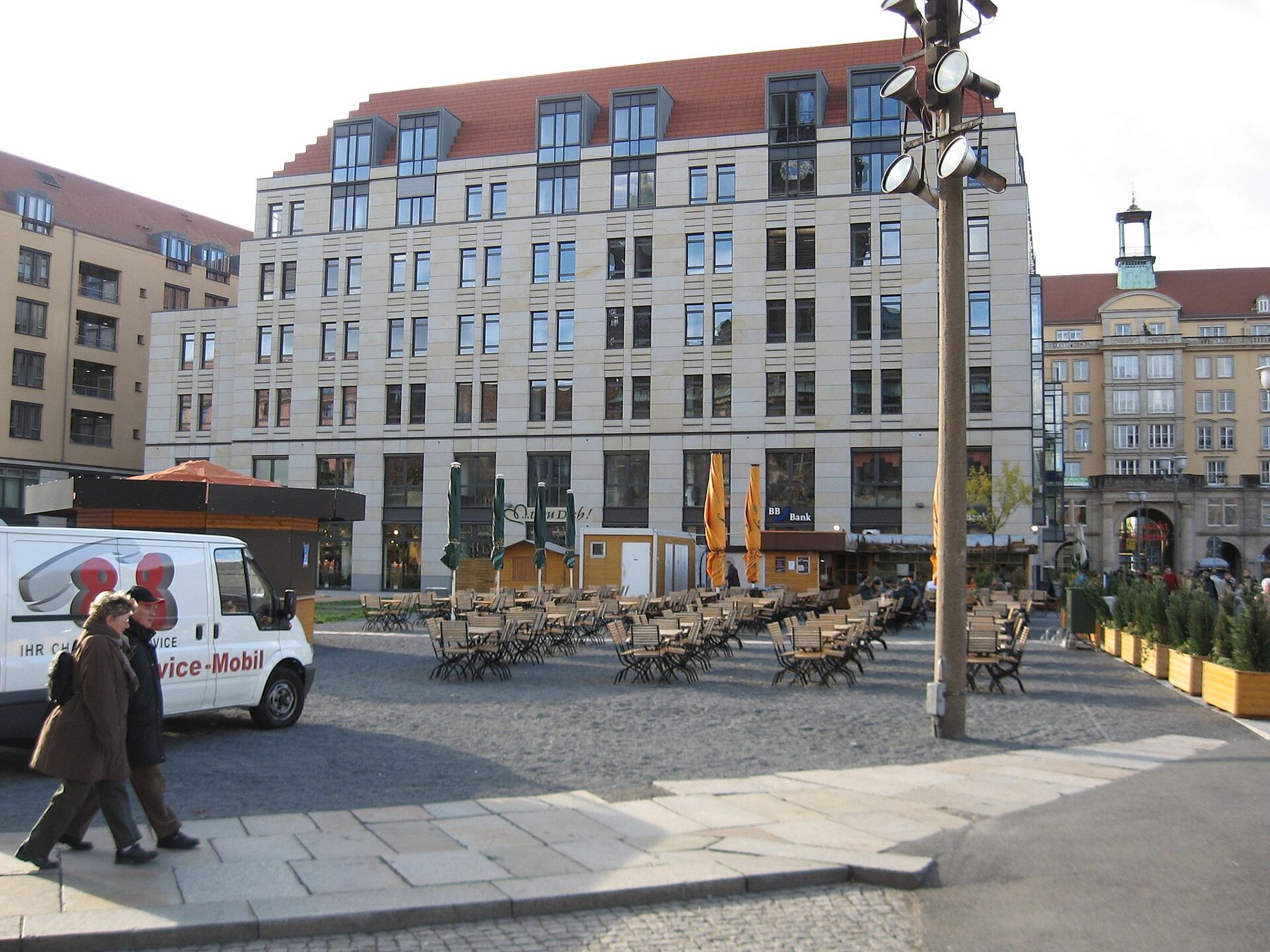
Altstadt · and nearbyThe Frauenkirche, rebuilt stone by stoneElsewhere the GDR built a new city. The Altmarkt, the old market square, was enlarged and lined in the 1950s with large blocks in the socialist-classicist style of the time, with arcades, sandstone trim and ornament borrowing from the baroque. Those buildings still frame much of the square. In the 1960s the Kulturpalast, a modern concert and congress hall, was added on its north side, and to the south Prager Strasse was rebuilt as a wide modernist boulevard.
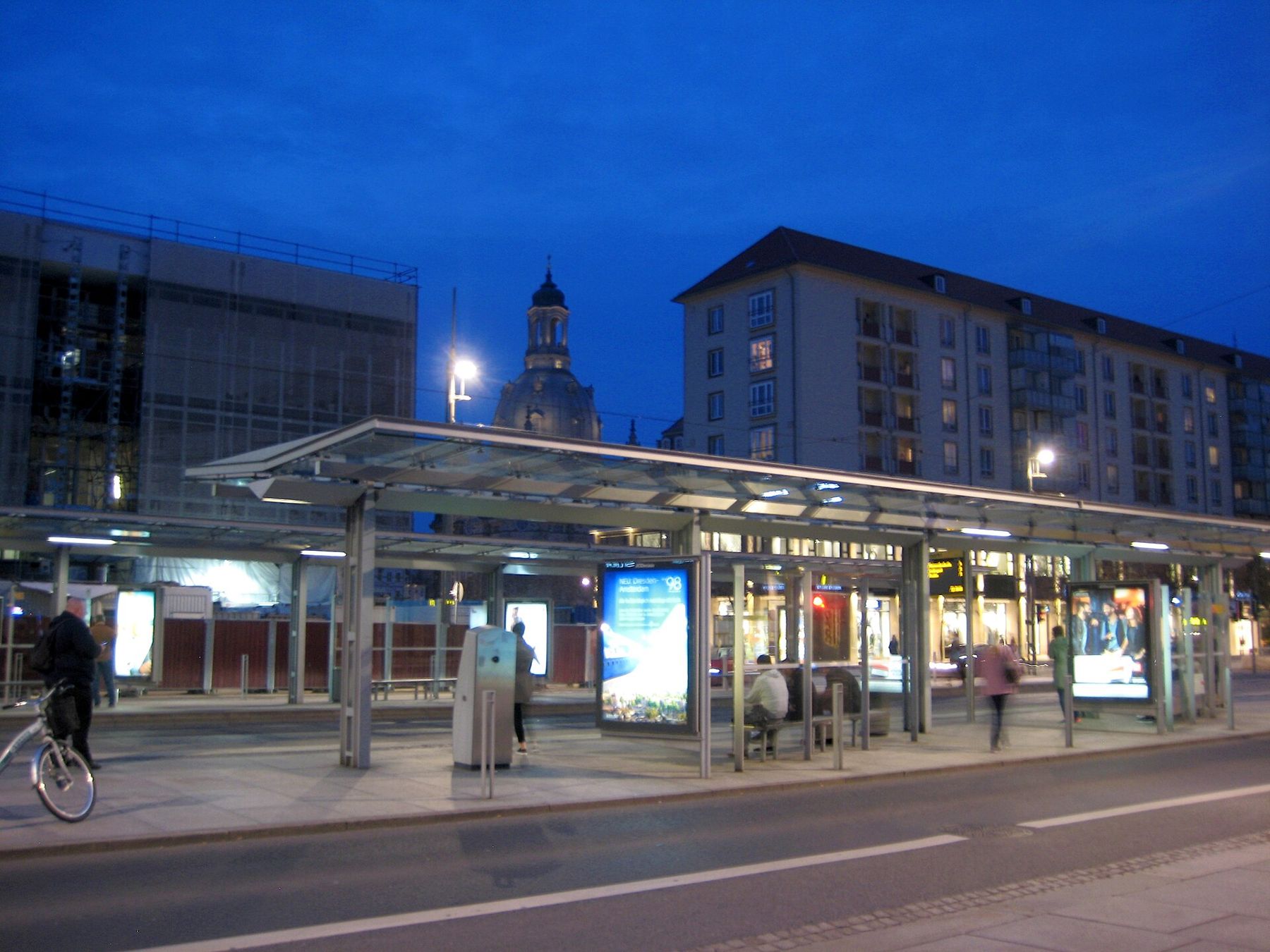
The ruins of the Frauenkirche were left as they lay, a heap of blackened stone in an empty square. Over time they became a memorial to the war, and the story of that ruin is told in our guide to the rebuilt Frauenkirche.
After 1990: the Neumarkt and the old town
German reunification brought a second wave of rebuilding. The Frauenkirche was raised again between 1994 and 2005, and the Residenzschloss, the palace of the Saxon rulers, has been restored step by step, its museums reopening room by room. Around the church, the empty Neumarkt was gradually filled again with townhouses, built from the 2000s onwards. Some of their facades were reconstructed from photographs and plans, sometimes including recovered fragments; others are new buildings in the old outlines.
On the Altmarkt, gaps left in the GDR years were filled with new buildings in the years after reunification, using stone and steep roofs to fit the square.
Not everything was rebuilt. Some churches were left as ruins for years and later cleared; others were restored only in part. Several streets of the old town were never laid out again, and their lines survive only on old maps. Bridges, the river front and the great buildings along the Elbe were repaired in turn, some quickly and some only after decades. Walking from the station to the river, you pass in a few minutes from a street rebuilt in the 1960s to a square rebuilt in the 1950s and a church finished in 2005, and each reflects the ideas and the means of its own time.
The result is a city of layers. A baroque church rebuilt in the 2000s stands a few hundred metres from 1950s socialist blocks, a 1960s concert hall and modern shopping streets. Debates over how much to reconstruct, and how faithfully, have run for decades and still continue.
Remembering on 13 February
Every year on 13 February Dresden marks the anniversary of the raids. Wreaths are laid at the Heidefriedhof and at other memorials. In the evening, around the time the first raid began, the church bells of the city ring together, and many people gather at the Frauenkirche with candles.
Since 2010 the city has also organised a human chain: thousands of people join hands around the old town centre, a gesture of remembrance and of standing together for peace. Details of the events, times and routes are published each year, so check before you go if you plan to take part.
Seeing the traces
Once you know where to look, the history is everywhere. The dark stones in the walls of the Frauenkirche are original pieces recovered from the rubble. Damaged sculpture stands beside restored copies on several buildings. Along the river, the view from the Elbe meadows shows a skyline that was lost and has been rebuilt. Take time with it, read the panels, and let the city tell its own story at its own pace.
More from arriving, history and the year · all five quarters